The French language
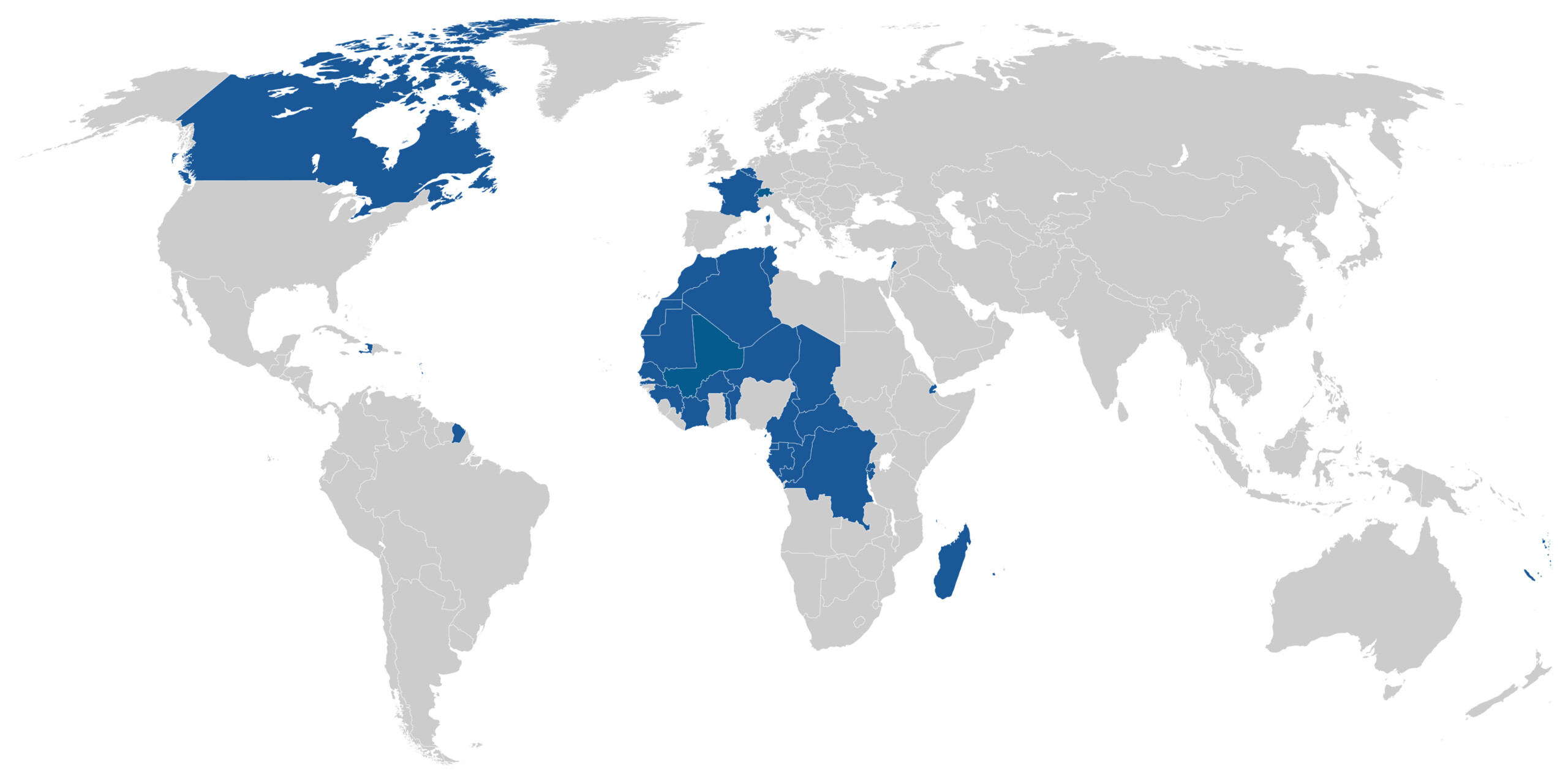
The French language is a Romance language that has its origins in Latin. French is the mother tongue or second language of more than 230 million people worldwide, especially in France and its overseas territories, Belgium, Switzerland, Canada and many African countries, such as Senegal, Togo, Gabon, Madagascar and the Ivory Coast. French is also one of the official languages of the European Union, the United Nations and many international organisations.
French is the second most widely learnt foreign language in the world after English.
Special features of German-French translations
There are various accent marks in the French language that can change the pronunciation of vowels: accent aigu (é), accent grave (è, à, ù) and accent circonflexe (â, ê, î, ô, û). There are also two other special characters: the trema (ë, ï, ϋ, ÿ) and the cédille (ç).
The accents can also be used to change the meaning of words. For example, „ou“ means „or“, but with an accent it becomes „where“ (où). With an accent, „sur“ (on) becomes „sure“ (sûr).
Unlike the German inverted commas („“), French translations use the so-called „guillemets“: « ».
Another special feature of German-French or English-French translations is the protected space. It is placed before two-part punctuation marks (such as colons, semicolons, question marks, exclamation marks and inverted commas) and ensures better readability.
Different language variants
Would you like to have your technical documents or marketing texts translated? Then you should always determine in advance for which language area the translation is required.
In Switzerland, for example, there are some differences to the French spoken in France. There are mainly differences in vocabulary, pronunciation and some grammatical structures.
Various terms are often used in French for Switzerland that are not commonly used in France: Breakfast in Switzerland is „déjeuner“, lunch is „dîner“ and dinner is „souper“. In France, on the other hand, the terms „petit-déjeuner“, „déjeuner“ and „dîner“ are used.
The numerals „seventy“ and „ninety“ are called „septante“ and „nonante“ respectively, whereas in France they are called „soixante-dix“ and „quatre-vingt-dix“. This different naming of the numbers also applies to Belgium. The French spoken in Belgium also differs in detail from the French spoken in France.
The protected space mentioned above is not used in French for Switzerland.
However, the differences are not comparable with Swiss German, which is almost impossible for a standard German speaker to understand. French as it is spoken in Switzerland is easy to understand even for a native French speaker.
Are you looking for a German-French or French-German translator?
Then Proverb, the translation agency from Stuttgart, is the right place for you.
In addition to German-French translations, we also offer foreign language typesetting for your technical documentation, catalogues, brochures and operating instructions. Our DTP professionals, who work with all standard DTP and graphics programmes, will be happy to help you with this. On request, you can receive the print-ready data in a layout programme (InDesign etc.) or as a print-ready PDF.
During this DTP work and the final proofreading, our graphic designers, French translators and French proofreaders check, for example, that accents and special characters are displayed correctly.
As French texts are longer than the German source text, care is taken during DTP to ensure that the French texts are displayed correctly and in full and that the layout is retained in the final French file.